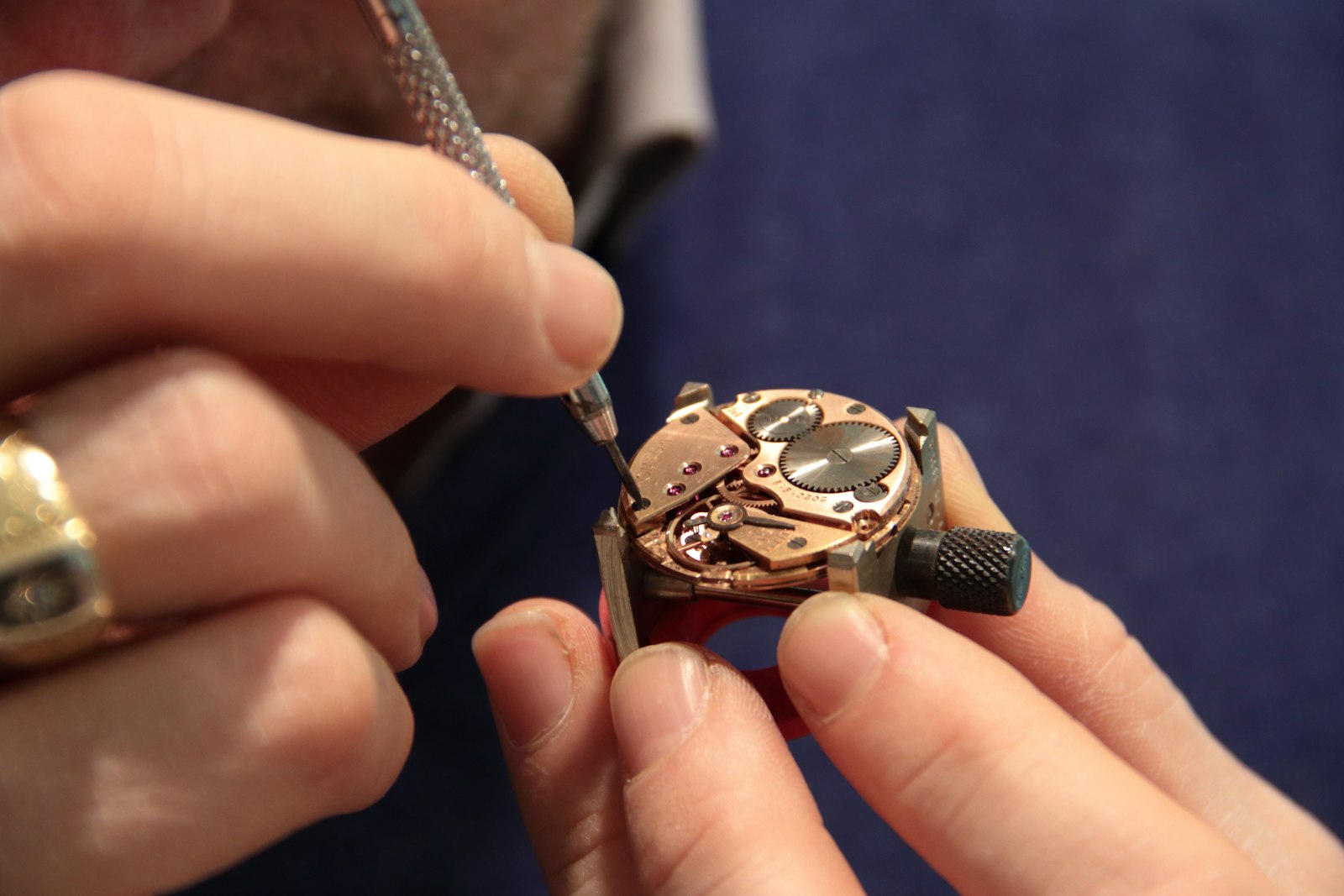
A mechanical watch is a small machine that runs on stored spring tension instead of a battery. Wind it correctly and it will keep time for decades. Wind it carelessly and you can strain the mainspring or the crown stem long before the rest of the watch shows its age.
Hand-wound vs. automatic
If your watch has no rotor weight visible through the caseback, it's hand-wound — it only runs on what you give it through the crown. Automatics wind themselves from wrist motion, but still benefit from a manual top-up if they've been sitting in a drawer for more than a day or two.
How many turns is enough
Take the watch off your wrist. Turn the crown clockwise in slow, even turns — 20 to 30 for most hand-wound calibers, or 15 to 20 to "jump start" an automatic before you put it on. You'll feel the resistance build as the mainspring reaches full tension. Stop as soon as you feel firm resistance; forcing it past that point is the single most common cause of a snapped mainspring.
Common mistakes we see on the bench
Winding while the watch is still on your wrist puts side-load on the stem and can wear the crown tube prematurely. Winding a stopped watch aggressively to "catch it up" is the other big one — always start slow, especially on a movement that's been dormant for weeks or longer.
If the crown ever feels gritty, loose, or spins without any resistance at all, stop and bring it in. That's usually a worn stem or a slipping mainspring — a quick, inexpensive fix if caught early.
Bring your watch to the bench
Bill Chandler services all types of watches in Meridian, Idaho — full inspections, honest quotes.
Call Us Now